
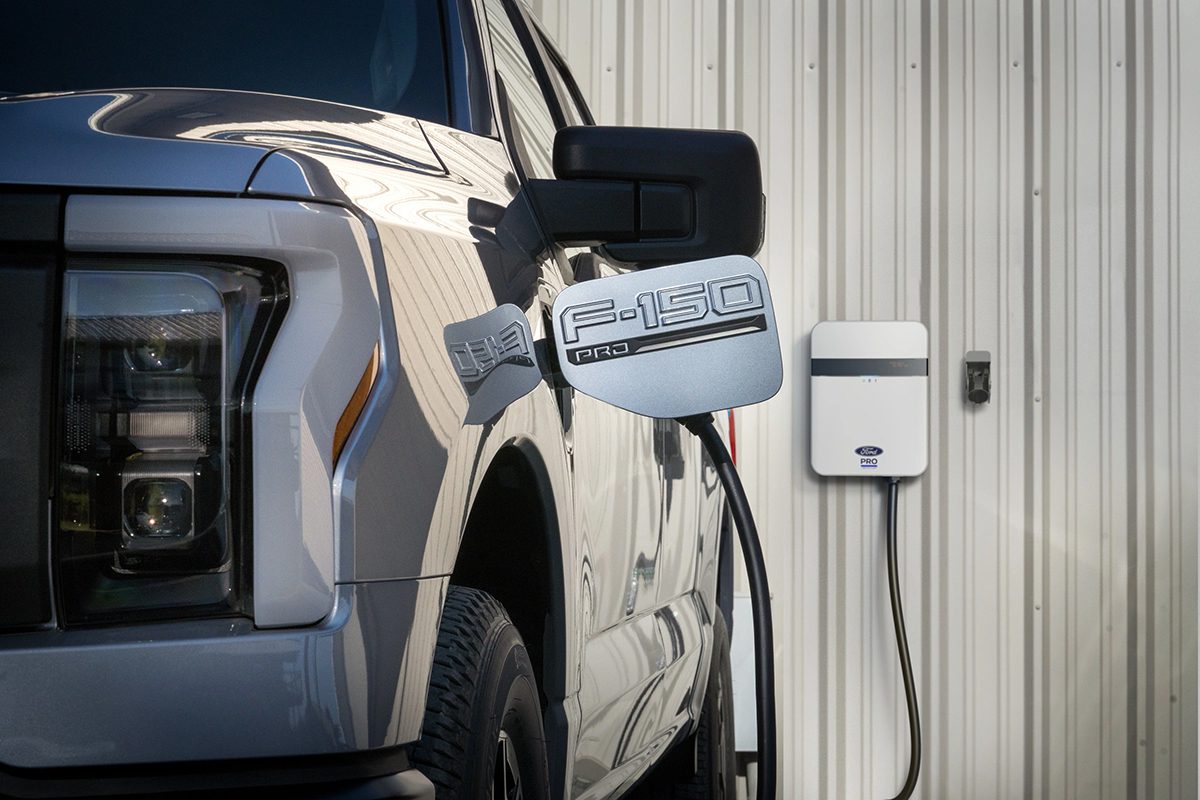
A new collaboration between Ford Pro and Southern Company, one of the nation’s largest energy providers, has shown that managed EV charging can reduce grid demand and save money, without interrupting fleet operations. The six-month pilot, conducted in the Southeast, offers fleets a blueprint for scaling electric vehicles (EVs) while maintaining reliability.
According to Ford Pro, the pilot successfully shifted EV charging to off-peak hours, reduced peak demand during stress events, and ensured that all vehicles were ready for use each day.
The project included:
- 200+ Ford F-150 Lightning pickup trucks operated by Southern Company.
- 150+ Level 2 Ford Pro chargers equipped with Ford Pro Intelligence software.
- Six months of testing under everyday fleet conditions.
Using Ford Pro Smart Charging, Southern Company was able to automatically schedule vehicle charging for times when electricity was cheaper and less carbon-intensive, primarily overnight. During grid “demand response” events, charging was temporarily reduced across the fleet to lower peak demand.
Fast Facts
Fast Facts
- 200+ Ford F-150 Lightnings and 150+ chargers tested over six months.
- 0.5 MW demand reduction achieved during 30-minute test events.
- No downtime: all vehicles remained ready for use each day.
- Energy costs lowered through off-peak charging schedules.
The results were clear, with fleet charging loads reduced by more than 0.5 megawatts during a 30-minute event, which is equivalent to cutting about 10 kilowatts per charger. Also, despite reduced power during these events, all the trucks were fully charged and available for daily use.
Many fleet operators face a critical question: Can electrification scale without creating new cost burdens or reliability risks? This pilot offers strong evidence that the answer is yes, if charging is managed intelligently.
Ford Pro emphasized that the pilot demonstrates how advanced software can simplify electrification for fleets.
For Southern Company, the pilot reinforced the importance of utility-fleet collaboration.
“Ford Pro’s energy management algorithm was able to throttle chargers to avoid windows of peak grid demand, shifting charging within the drivers’ existing charging window while still ensuring that drivers got the energy they expected out of a charging session,” explained Tom Canada, fleet electrification project manager at Georgia Power, a Southern Company subsidiary. “The insights gleaned from this pilot represent valuable learnings that can be applied to help us manage our electric vehicle fleets more efficiently and help us better advise customers who may approach our electric utilities for advice about managed charging for their fleets.”
The Ford Pro–Southern Company project highlights several practical lessons for fleet leaders:
- Plan charging strategies early: Integrating managed charging software at the start of an electrification project ensures vehicles are charged reliably without inflating energy costs.
- Engage utilities as partners: Demand response events show the value of working closely with local utilities. Fleets can help stabilize the grid—and earn incentives—by aligning with demand management programs.
- Prioritize fleet readiness: Automated scheduling allows fleets to optimize for cost savings while still ensuring all vehicles meet duty-cycle needs.
- Think beyond the pilot: If results from 200+ trucks can deliver measurable savings, scaling to larger fleets could provide even greater benefits across the industry.
Ford Pro stated it will continue exploring managed charging solutions with fleets of all sizes. The company views this pilot as a “scalable model” that can be replicated across industries, from utilities to delivery fleets to municipal operators.
For Southern Company, the findings will inform broader efforts to integrate EVs into its service territory and support the growth of transportation electrification in the Southeast.
As fleets weigh the costs and logistics of electrification, this pilot provides an important takeaway: software-enabled charging strategies can reduce costs, enhance grid reliability, and keep vehicles ready to roll.